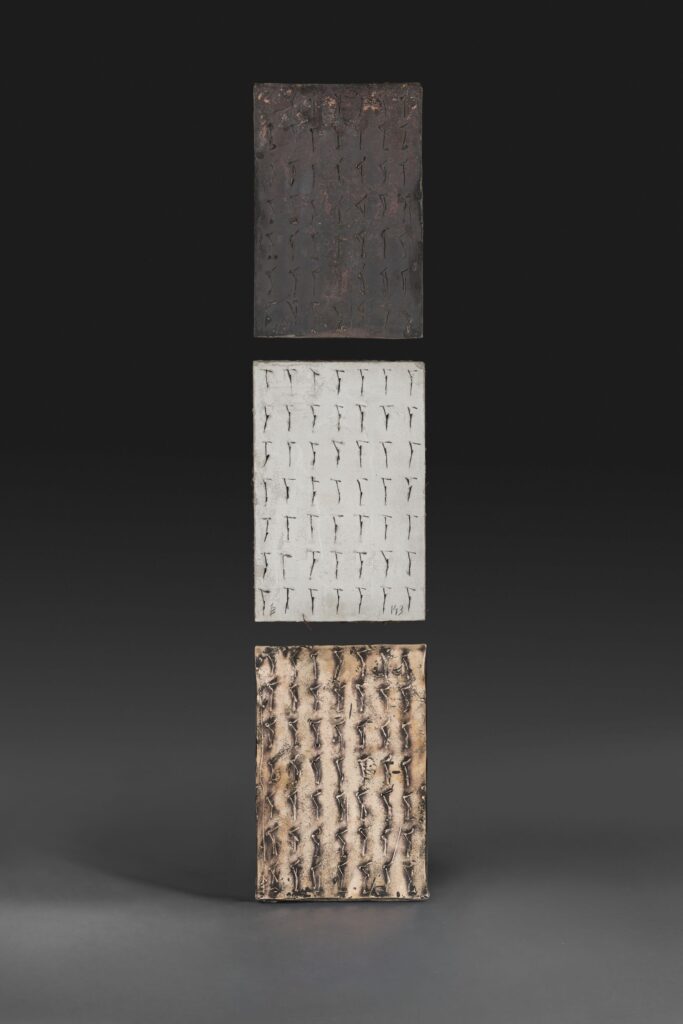
In 1962, Picelj initiated a series of his self-published “Edition a” art booklets, having released a total of seven publications up until 1964. Each issue of “Edition a” featured the work of one artist —mostly of a colleague whose work he admired.

In 1962, Picelj initiated a series of his self-published “Edition a” art booklets, having released a total of seven publications up until 1964. Each issue of “Edition a” featured the work of one artist —mostly of a colleague whose work he admired.
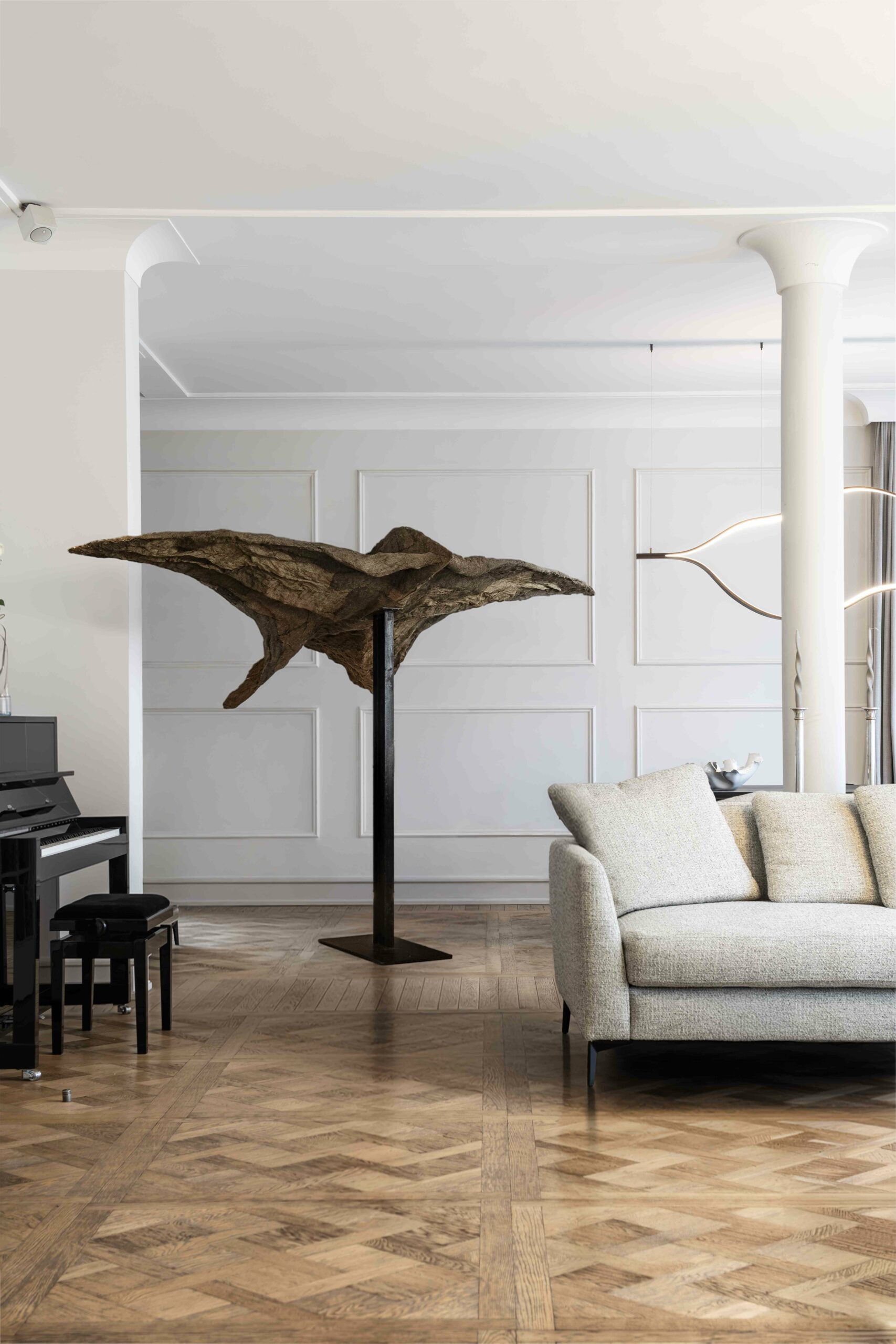
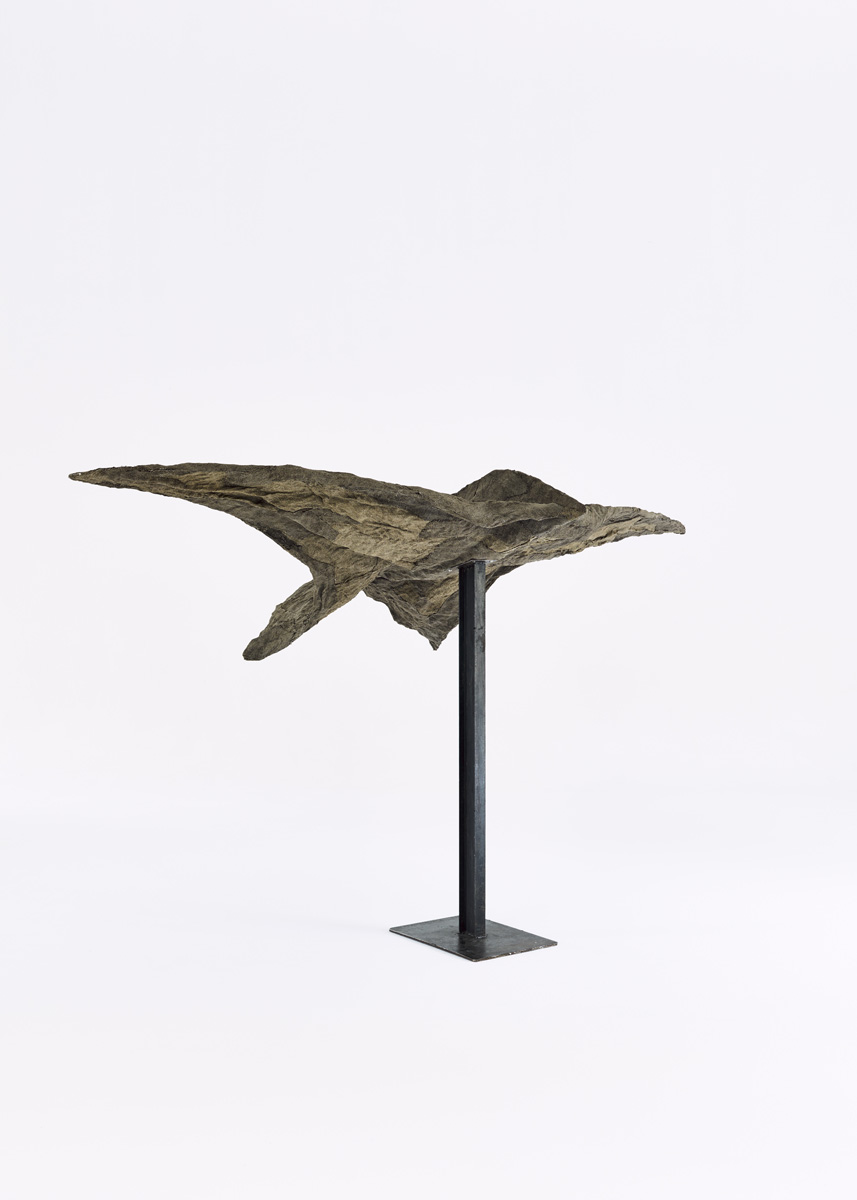
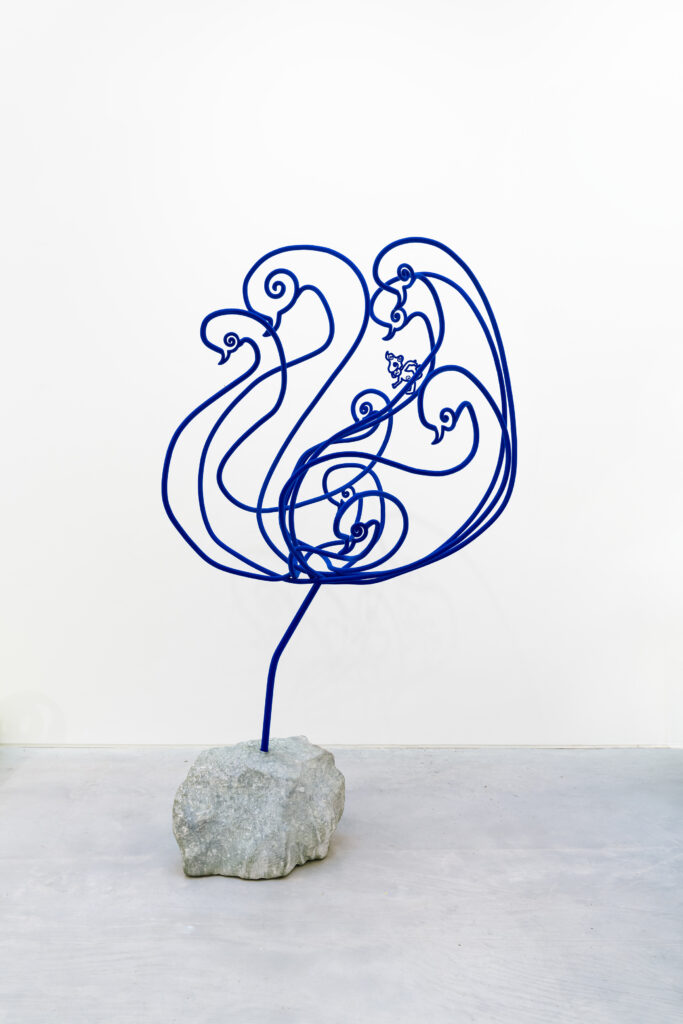
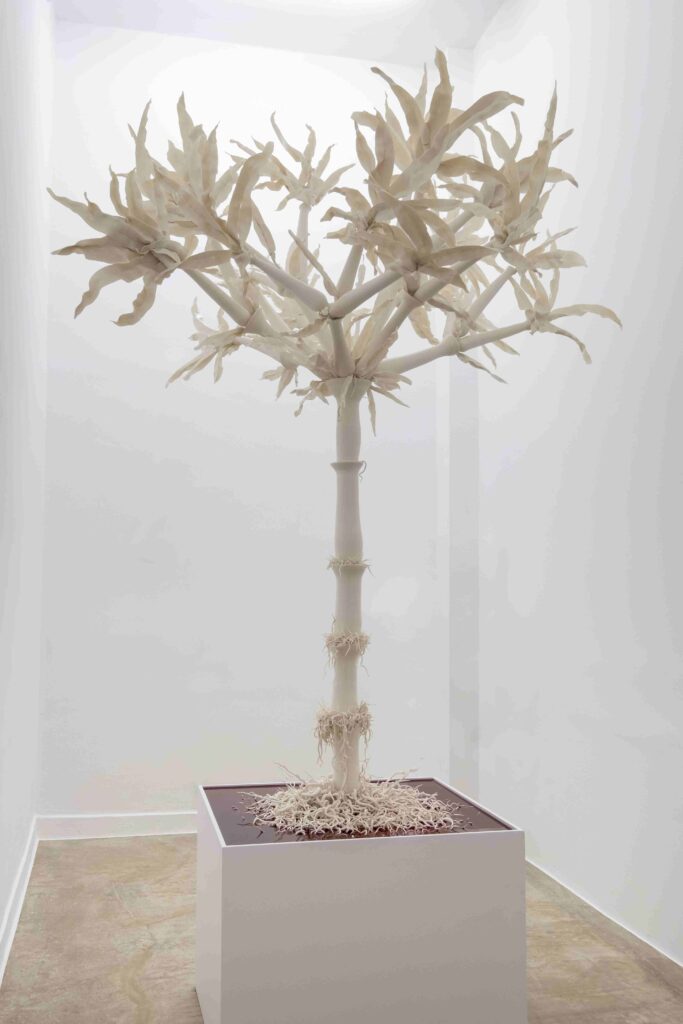
Bird II, 2008
burlap, resin, steel rod
170 x 280 x 175 cm
Estimate: €190,000–210,000
The sculpture Bird II was created in the final period of Magdalena Abakanowicz’s career. After 2000, the artist – known for her monumental depictions of human figures, heads, and embryos – turned increasingly toward forms inspired by the animal world. The first birds appeared in her art at the end of the 1990s, made of openwork wire matter, which was soon replaced by more durable aluminium resistant to weather conditions. These sculptures, with outstretched wings mounted on tall, slender pedestals, were first exhibited in 2001 in the exhibition Birds – Messages of Good and Evil in Milwaukee (USA), and later among others in Wrocław, in front of the National Museum, the Ethnographic Museum, and the Museum of Contemporary Art. Although Abakanowicz explained that she was above all interested in the human being and the human condition, the move away from anthropomorphic forms toward animal ones proves only apparent. The birds become metaphorical equivalents of human figures – equally unsettling, fragmentary, and distant from realistic representation. The artist maintained the equality of both worlds, emphasizing their shared sources and analogies.
The presented Bird II radiates both strength and melancholy. On the one hand, its outstretched wings suggest readiness for flight; on the other, its immobilization on a pedestal deprives the sculpture of the possibility of taking off. In this way, the work creates tension between the desire for freedom and the experience of captivity. Unlike earlier works placed directly on the ground, the sculpture set on a raised base separates itself from the viewer – we no longer coexist with it, becoming mere observers. Abakanowicz’s birds contain ambiguity: they are neither an affirmation of nature nor its simple metaphor. Rather, they are projections of the human condition – loneliness, helplessness, and the need to transcend limitations.
Magdalena Abakanowicz (b. 1930, d. 2017) is the most famous Polish artist, internationally recognized on the art scene. She was a sculptor, textile and installation artist. She studied in Sopot and at the Academy of Fine Arts in Warsaw. In 1979, she received the title of professor at the State Higher School of Fine Arts in Poznań, where she headed the tapestry studio from 1965 to 1990.
Initially, she worked only in painting. It was only at the turn of the 1950s and 1960s that her spatial compositions—the famous Abakans—completely changed the understanding of the visual possibilities of textile, the use of materials, and the relationship between the artwork and its environment, exerting a huge influence on the development of the field worldwide. From the early 1980s onward, she worked mainly in sculpture. For her monumental works, she also used wood, metal, and stone. She also created architectural projects.
In 1962, at the famous Lausanne Biennale of Tapestry, Abakanowicz’s composition of white forms covering 12 square metres caused a sensation. In 1965, one of her spatial tapestries won the Grand Prix at the São Paulo Biennale, securing her broad international recognition. The artist represented Poland at the Venice Biennale (1980), and her works are held in some of the world’s most renowned art collections, including the Metropolitan Museum in New York, Centre Pompidou in Paris, and the Stedelijk Museum in Amsterdam. In May 2023, her solo exhibition was held at the Tate Modern in London. In recent years, Magdalena Abakanowicz’s works have repeatedly broken records on the Polish art market.