In 1962, Picelj initiated a series of his self-published “Edition a” art booklets, having released a total of seven publications up until 1964. Each issue of “Edition a” featured the work of one artist —mostly of a colleague whose work he admired.

In 1962, Picelj initiated a series of his self-published “Edition a” art booklets, having released a total of seven publications up until 1964. Each issue of “Edition a” featured the work of one artist —mostly of a colleague whose work he admired.

The artists, coming to Malta from Poland and Ghana, will intertwine the historical narratives of both countries, drawing on weaving traditions and the island’s local heritage. Their collaboration began during Accra Cultural Week 2025 in Ghana, where, together with local artists Moses Adjei, Cornelius Annor, and Raphael Adjetey Adjei Mayne, they conducted art workshops for children exploring the textile art heritage of Poland and Ghana. The workshops took place at Kids Haven School, built by the Omenaa Foundation.
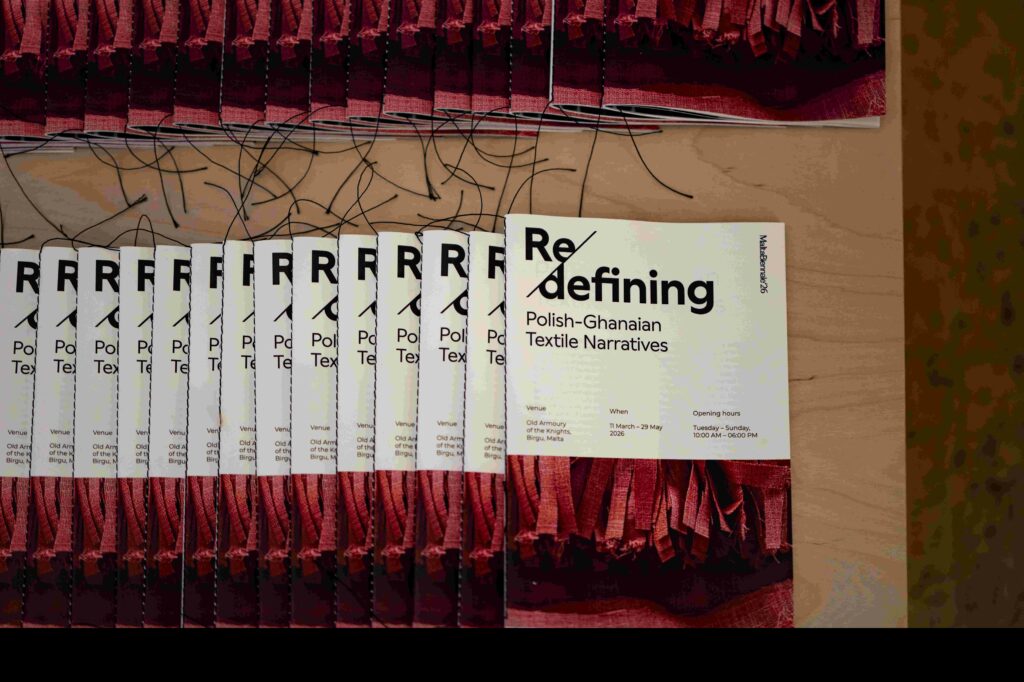
Running from 11 March to 29 May 2026, the OmenaArt Foundation’s thematic pavilion will reference the philosophy of Ubuntu – “I am because we are” – emphasizing interdependence, community, and mutual respect. This idea links the artists’ collaboration with historical Polish-Ghanaian relations that have developed since the 1960s. The artworks will be accompanied by a premiere sound installation by the composer Mariusz Szypura. The pavilion will also feature a public program including debates, panel discussions, and meetings with international experts.
The exhibition will explore intercultural relationships across past, present, and future perspectives, while simultaneously interpreting the central theme of Malta Biennale 2026 – CLEAN | CLEAR | CUT – which refers to ideas of repair, connection, and purification.
The OmenaArt Foundation project highlights the significance of the Polish and Ghanaian contemporary art scene. Through its presence at the Malta Biennale – an important global artistic platform – it strengthens intercultural dialogue and promotes the rich textile traditions of Poland and Ghana
Artists: Ernestina Mansa Doku, Marta Nadolle, Eliza Proszczuk
Sound installation: Mariusz Szypura
Curator: Natalia Bradbury
Exhibition design: Nicolò Bianchino, Aleksandra Chodnikiewicz, Małgorzata Góra
Producers: Maria Galea, Joanna Szulc, Michał Żyłka
Graphic concept: Justyna Mikusz
Film by: Michał Żyłka, Wojtek Ciszkiewicz
Communication coordination: Justyna Komorek
Communication: Amelie Dimech, Maria Galea, Agnieszka Gruszczyńska-Hyc, Bartosz Ligocki, Joanna Rożniakowska
Photos by: Wojtek Ciszkiewicz, Alex Dolny, Sarah A. N. Dowuona, Brian Grech
Executive Director of OmenaArt Foundation & Phenomenaa Gallery: Natalia Bradbury
Director of LuginsLand of Art: Joanna Popiół
Founder & Visionary: Omenaa Mensah
Organisers: OmenaArt Foundation, LuginsLand of Art, Malta Biennale
Partners: Embassy of the Republic of Poland in Valletta, Central Museum of Textiles in Łódź, Phenomenaa Gallery, Apart, Luce&Light, LOT Polish Airlines
Media Partners: GQ Poland, XYZ, Daily Art
Redefining. Polish-Ghanaian Textile Narratives is an attempt to reclaim the memory of one of the lesser-known yet highly significant episodes of the 20th century – the collaboration between Poland and Ghana in the 1960s, during the global wave of decolonization and intense geopolitical shifts. It was a bold and unusual gesture: a newly independent African state and a Central-Eastern European country functioning within the realities of the Eastern Bloc undertook an experimental attempt to build relations based on partnership, education, and mutual support.
This relationship was neither a colonial project nor a purely transactional one. Its potential was grounded in a belief in the possibility of solidarity beyond divisions, as well as in values close to the philosophy of ubuntu, that is, the conviction that an individual exists through community and that development is a collective process. The fact that this cooperation faded before it could fully develop leaves space today not so much for nostalgia as for imagination.
The exhibition is both a tribute to and a symbolic emphasis of that moment – an attempt to restore it to contemporary circulation of thought. It does not focus on geopolitical analysis, although it touches upon history and politics. At its center are bonds, relationships, and the question of a lost – or perhaps only suspended – opportunity to build an intercontinental community.
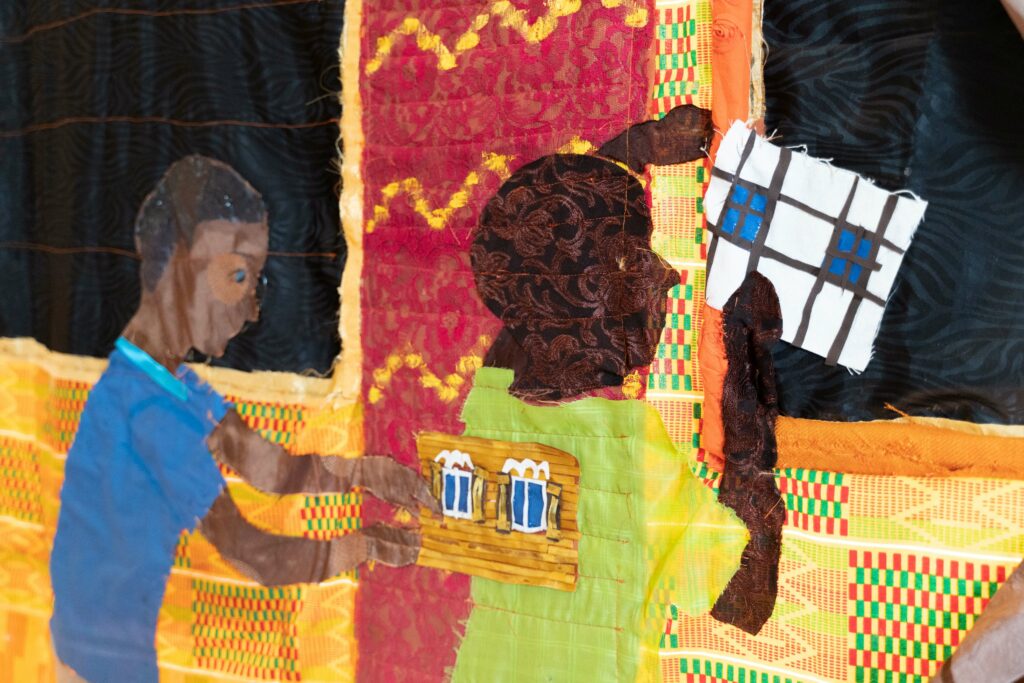
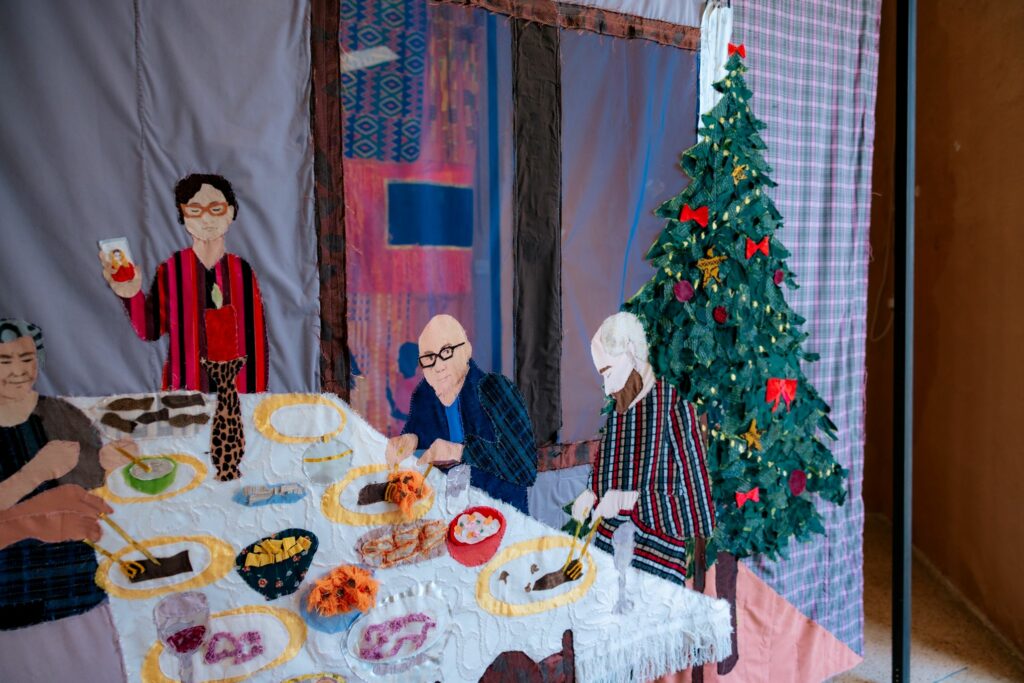
The project unfolds through the meeting of three artists from Poland and Ghana who had not known one another before. Their first shared experience was a workshop with children at the Ghanaian Kids Haven School, where the youngest participants built textile models of houses, with façades and interiors, with everyday life on both sides. This gesture, simple yet profound, became a metaphor for the entire project: getting to know oneself through the other and discovering one’s identity in relation to an unfamiliar culture.
The artists then traveled to Malta, an island located between Europe and Africa that for centuries has been a space where influences intersect. Its geographical and symbolic position adds another dimension to the project: Malta becomes not only a site of presentation but a real bridge between continents.
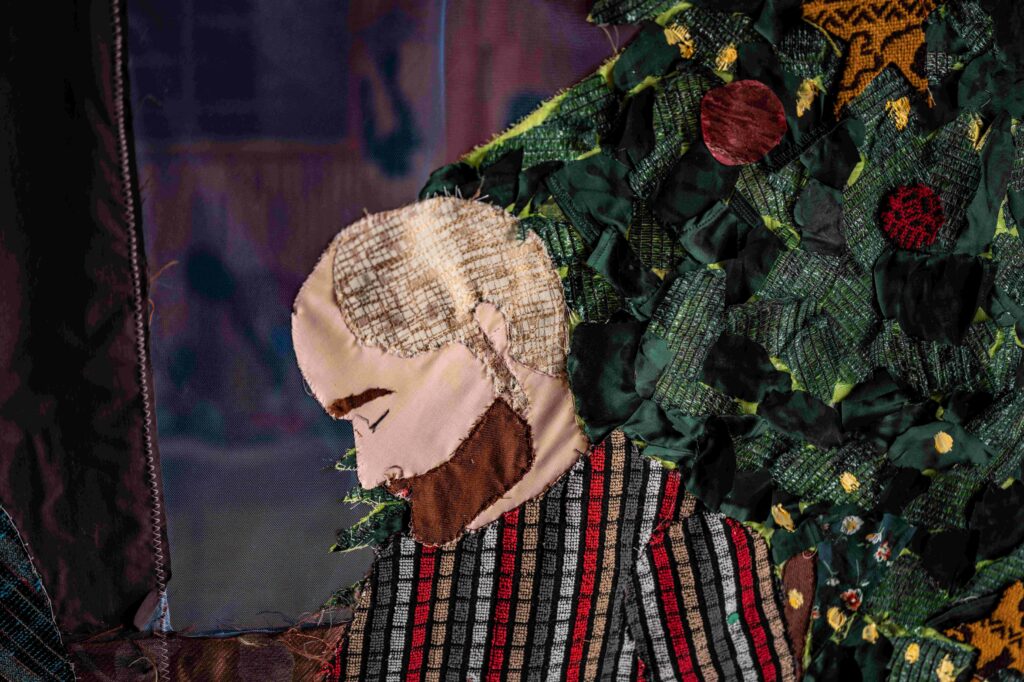
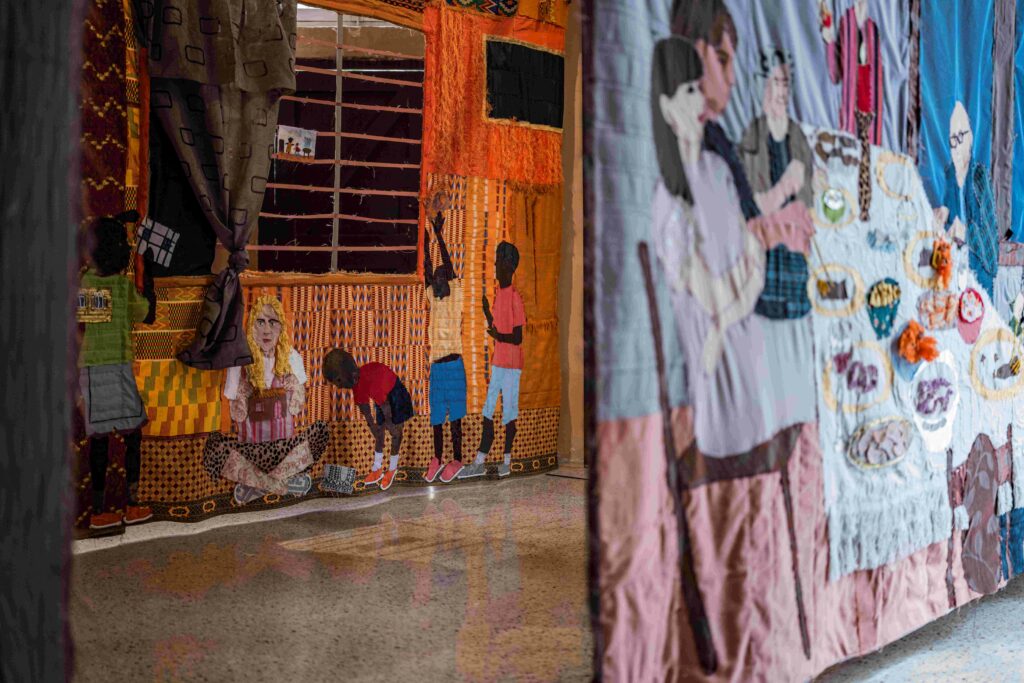
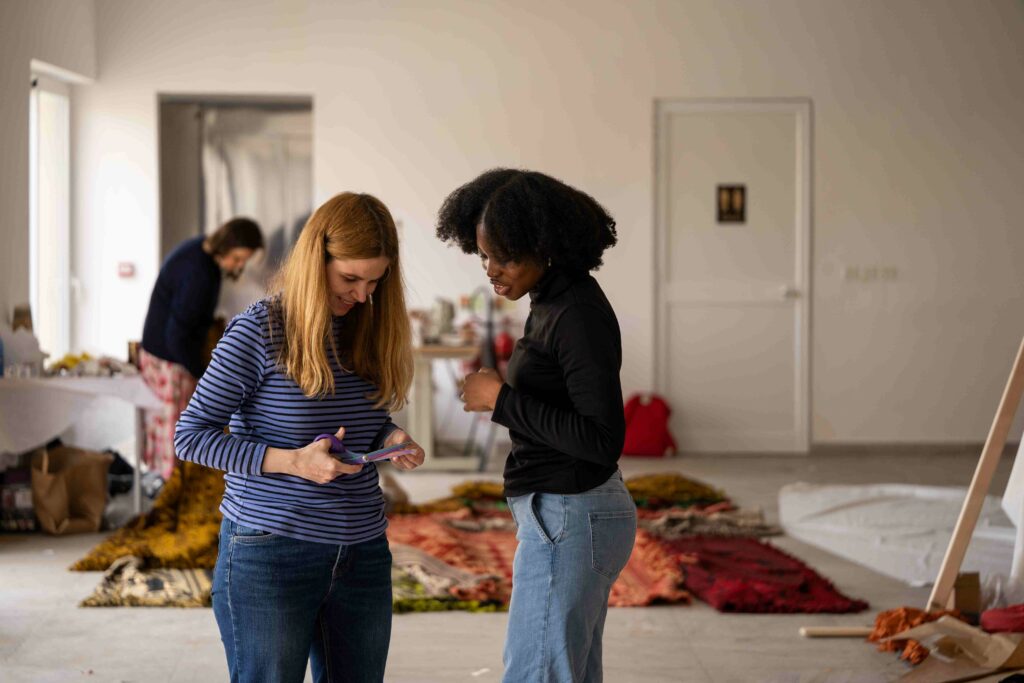
The process: conversations, collaborative work, and exchange of experiences, was as important as its result: three monumental textile installations created specifically for the pavilion space. The medium of textile, deeply rooted in the traditions of Ghana, Poland, and Malta, becomes here a language of dialogue. Fabric is a weave; individual threads remain fragile, but when interlaced, they create a structure capable of carrying the weight of memory and meaning. It is also a medium with strong roots in women’s craft, for centuries marginalized, private, and domestic, in the 20th century began to break boundaries between applied and fine art.

In the 1960s, parallel to the Polish-Ghanaian collaboration described here, the International Tapestry Biennial of Lausanne was taking place, an event that revolutionized the perception of textile as an autonomous medium of contemporary art and became crucial for the international recognition of the Polish textile school. It was then that Polish artists began creating monumental, experimental forms that transcended the framework of traditional tapestry. This moment of textile’s emancipation as an artistic language symbolically intertwines with the history of intercontinental solidarity. Both processes carried the courage to redefine existing narratives.
Today, textile is experiencing a second life. It returns as a critical, ecological, and relational medium. In the context of this exhibition, its renaissance aligns with a message of hope: what has been considered past, marginal, or forgotten can be woven again into a new story.
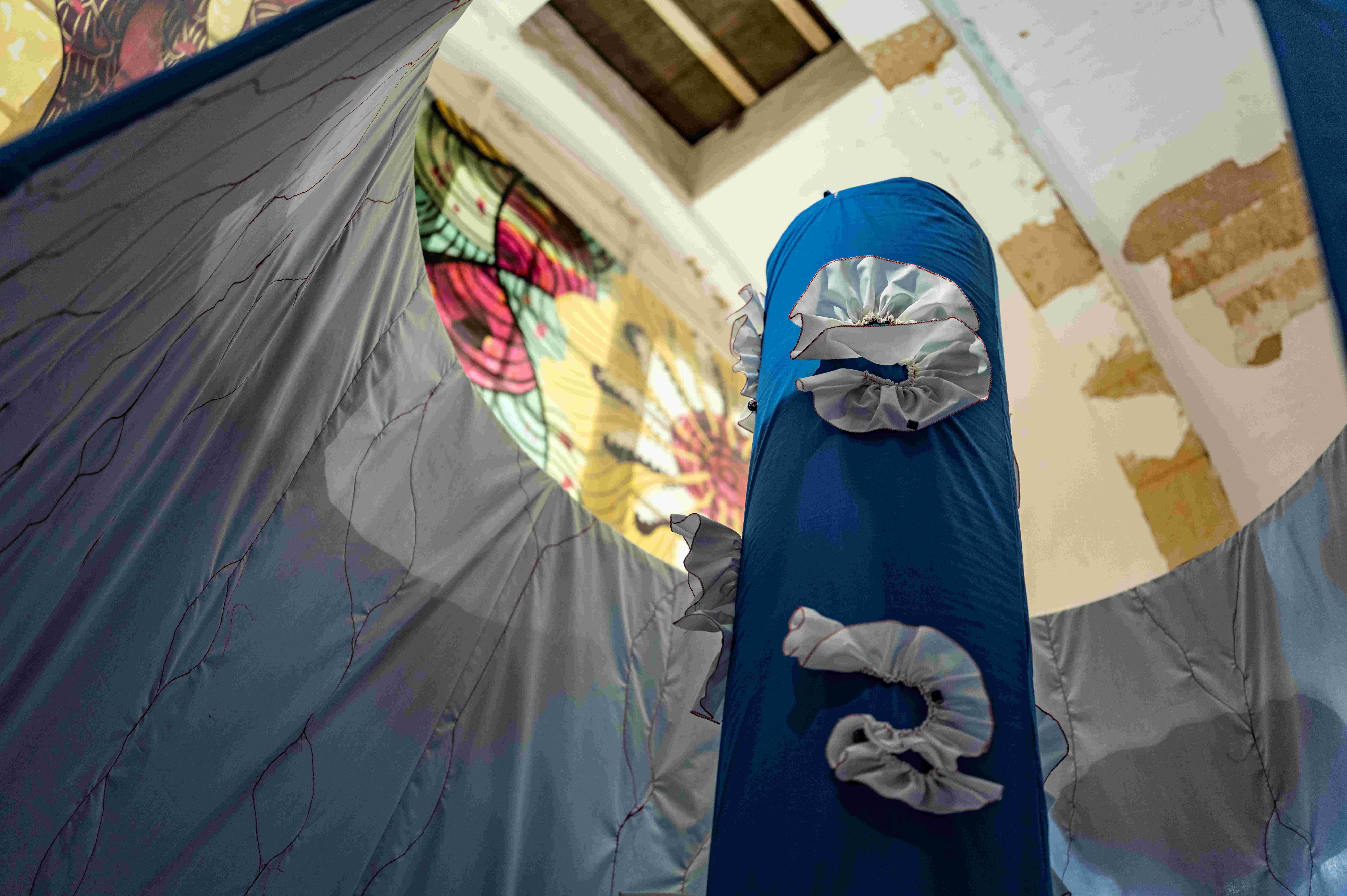
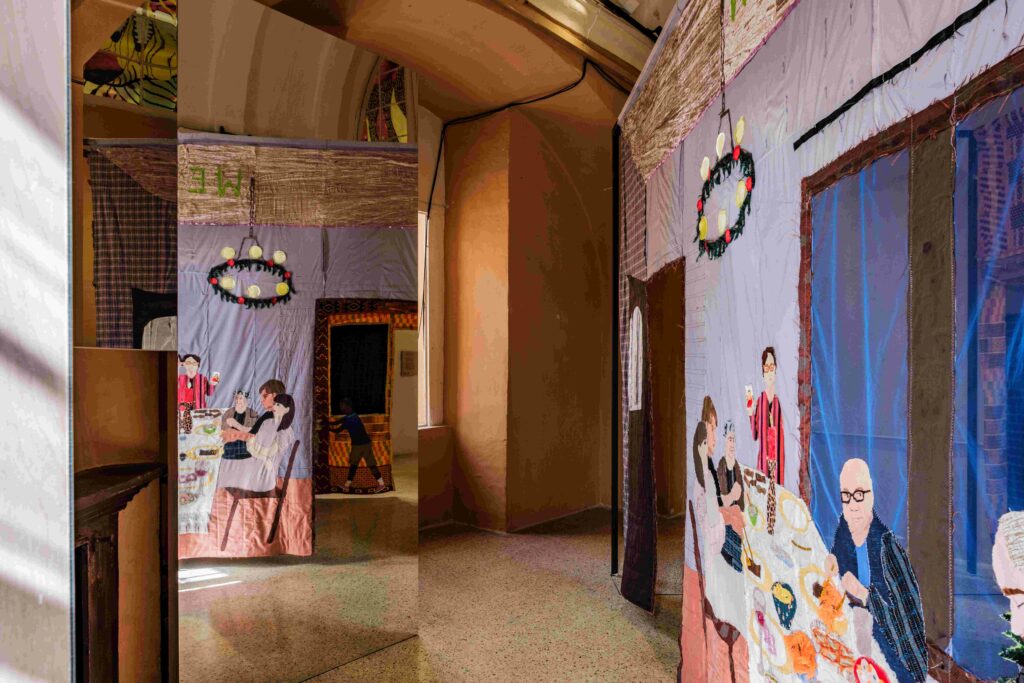
In I Miss You, Marta Nadolle juxtaposes two houses – a structure transferred from Ghana symbolizing a school and the artist’s family home in Poland. Visitors can cross their thresholds, physically and emotionally experiencing the meeting of two worlds. The installation reminds us that community is not based on uniformity but on the ability of differences to coexist, like in a city where buildings from different eras and cultures form one organism.
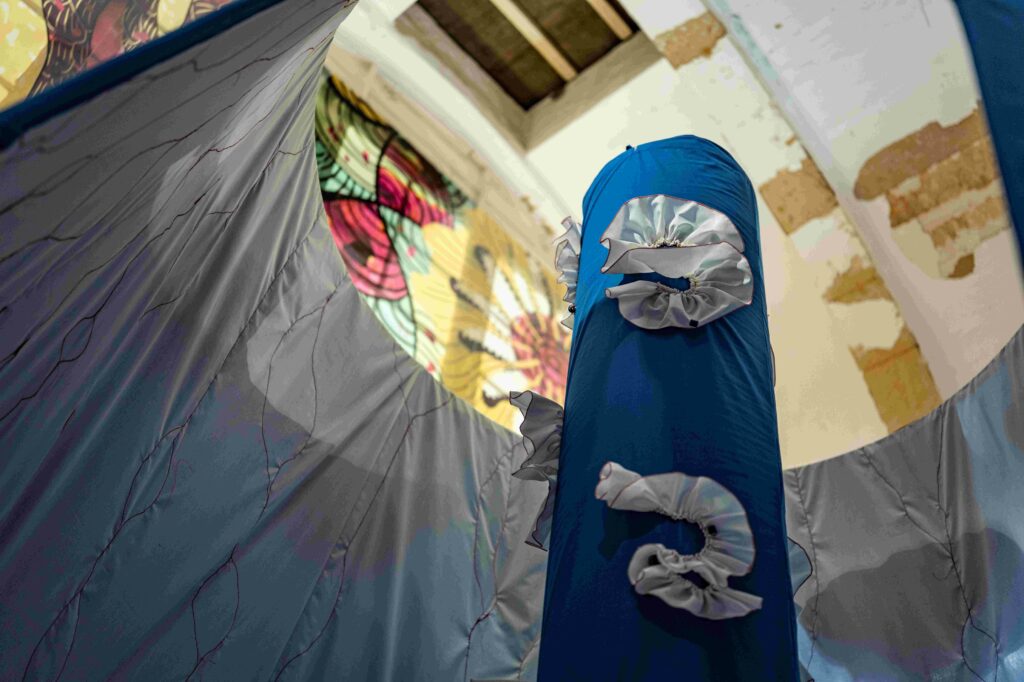
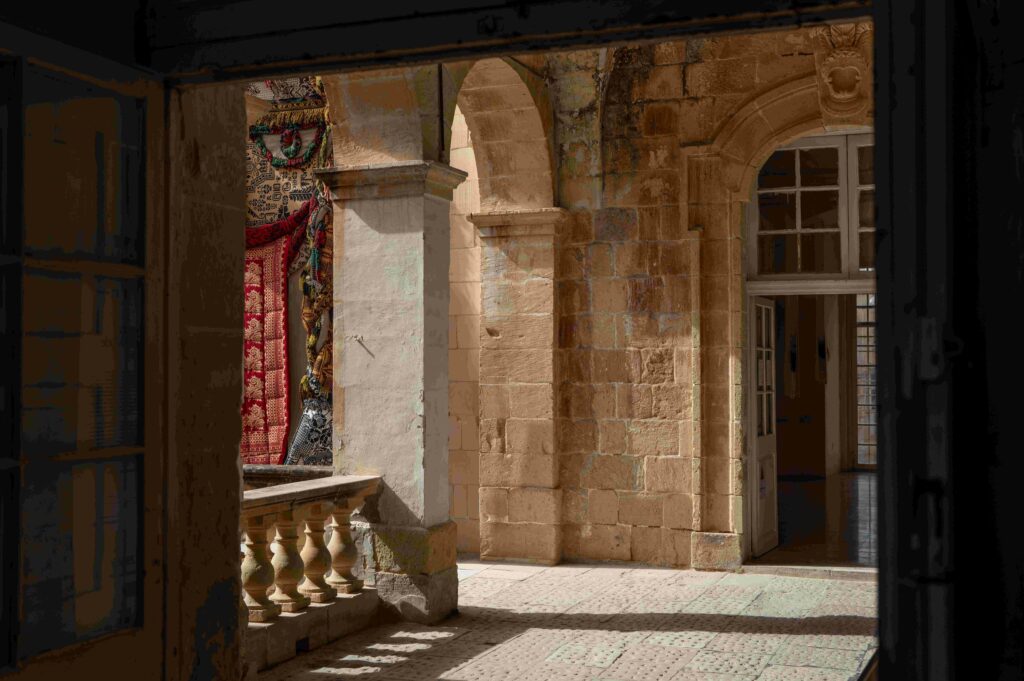
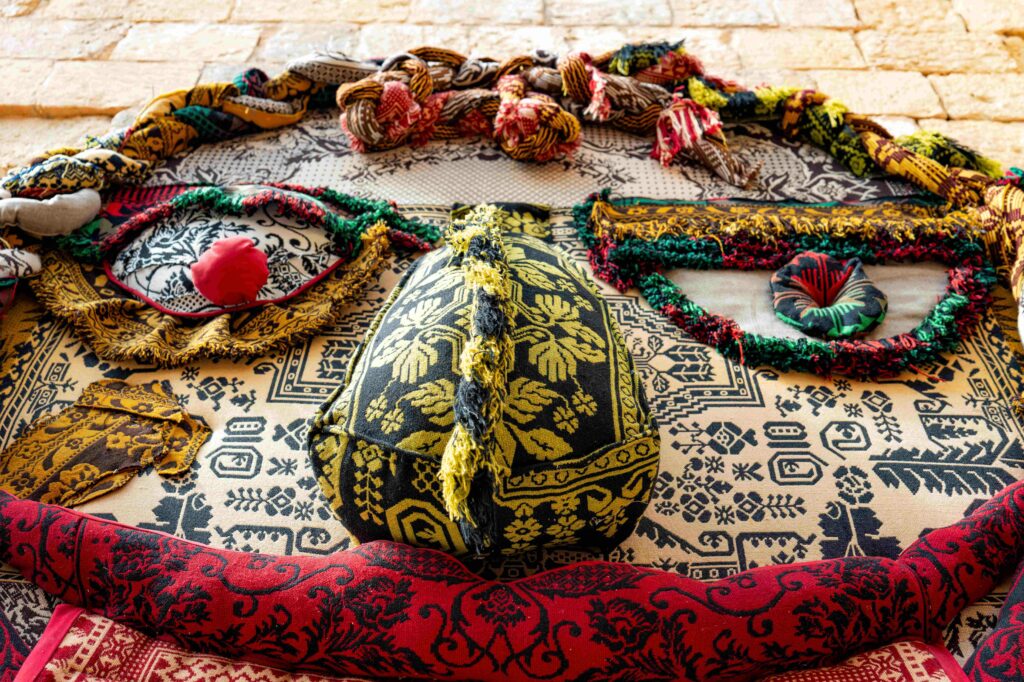
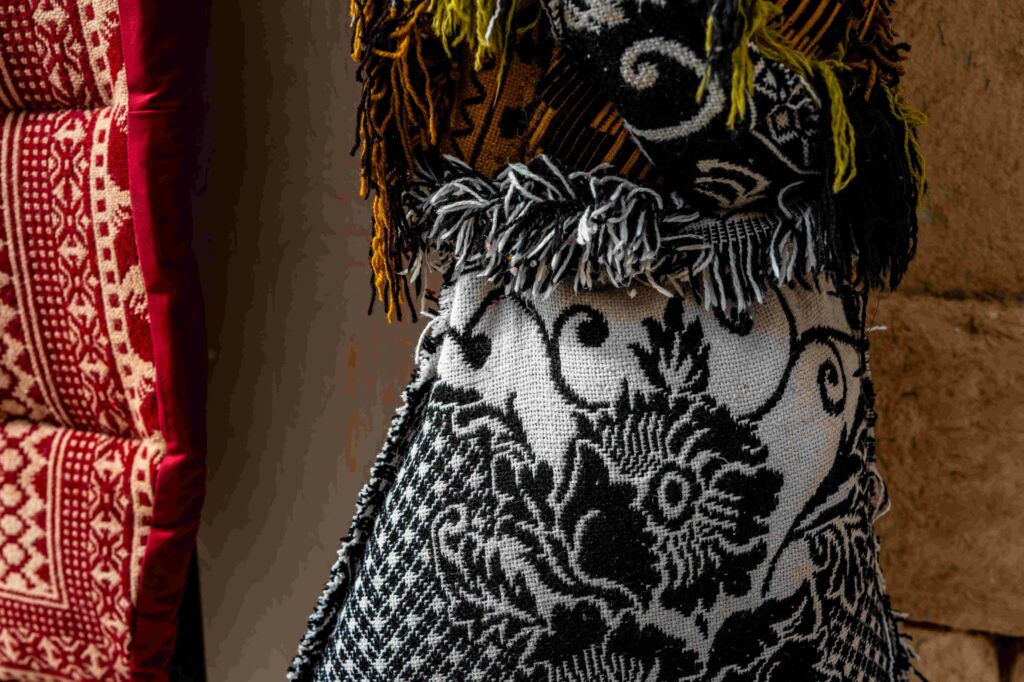
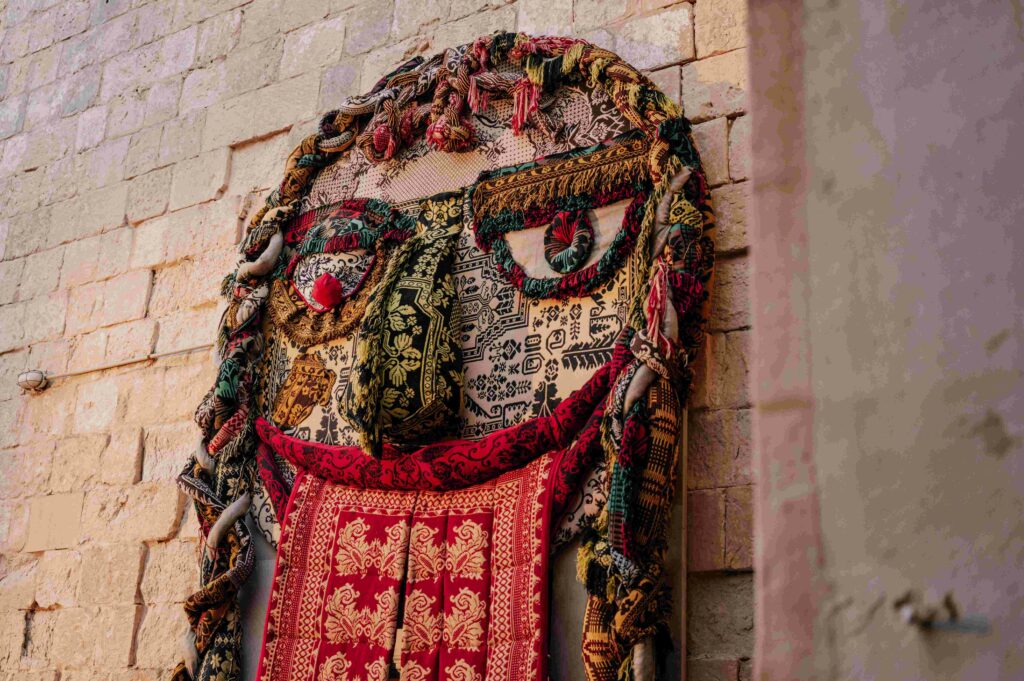
Eliza Proszczuk’s monumental mask, titled Where the lad arrives, good fortune thrives…, refers to the Slavic New Year tradition of Draby – figures bringing prosperity. Made from woolen capes from Podlasie and suspended above the entrance to the pavilion, it becomes a portal between worlds: the living and the dead, past and present, Poland, Ghana, and Malta. A protective talisman that connects the folk imagination of Central Europe with African mask symbolism and the Mediterranean tradition of carnival.
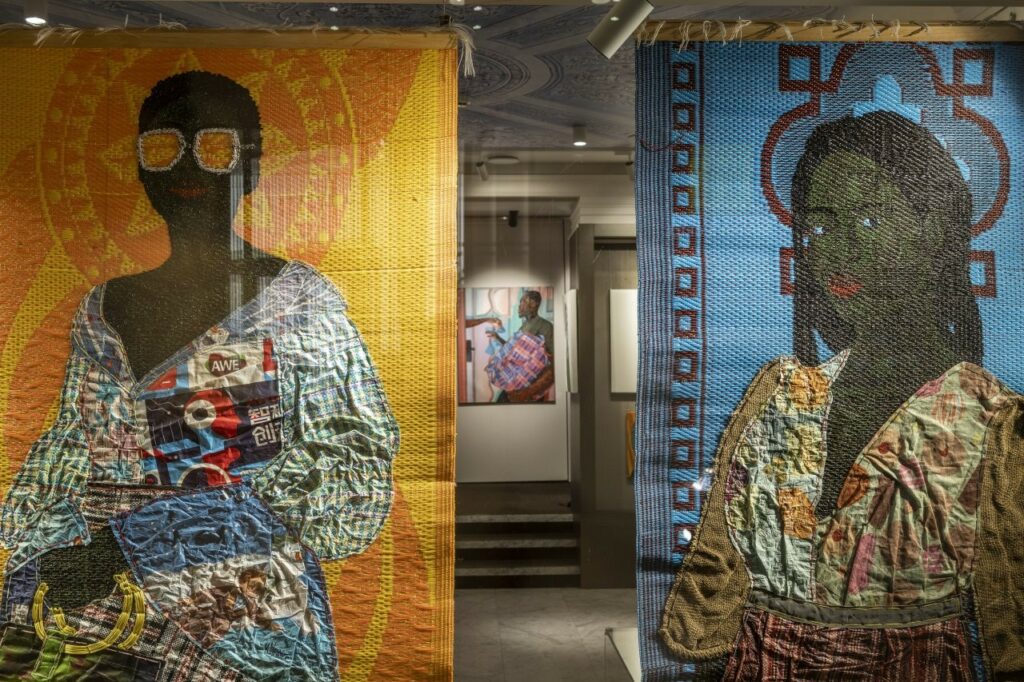
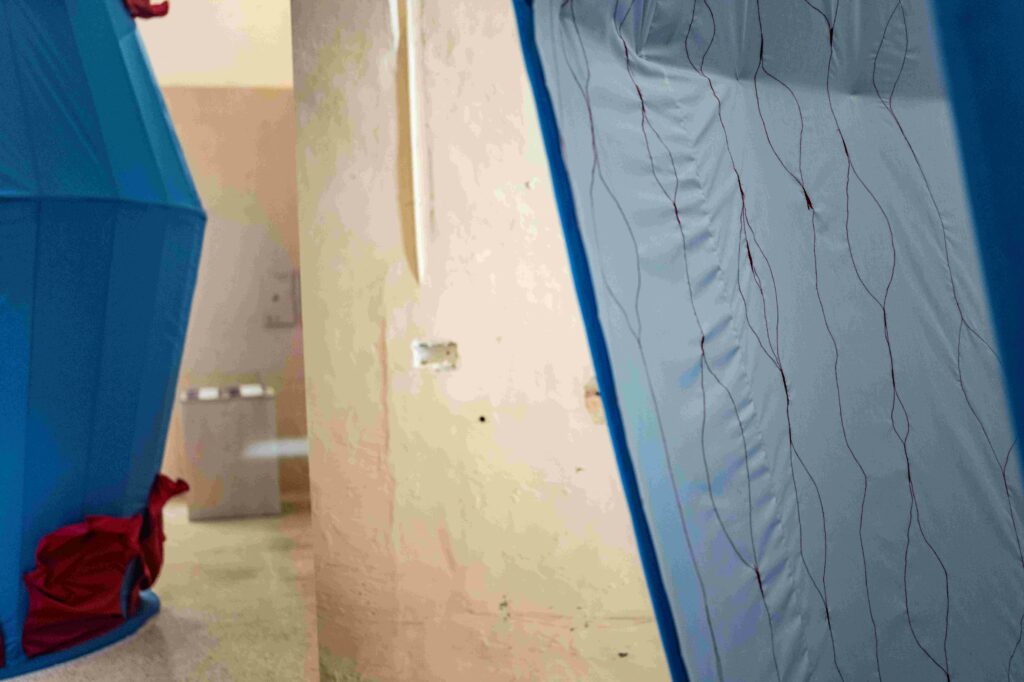
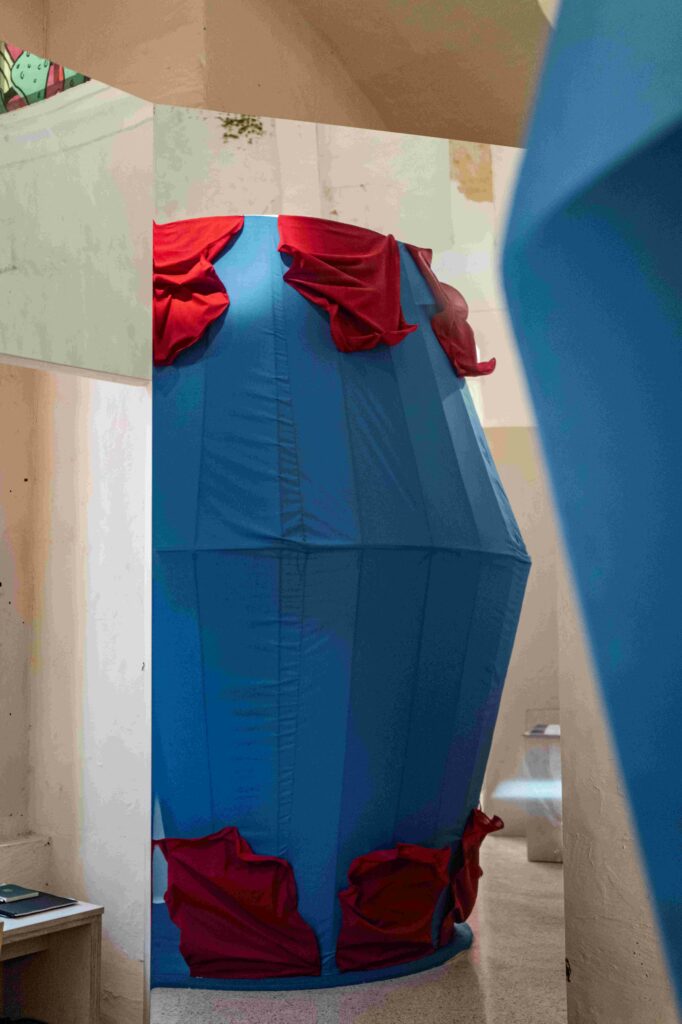
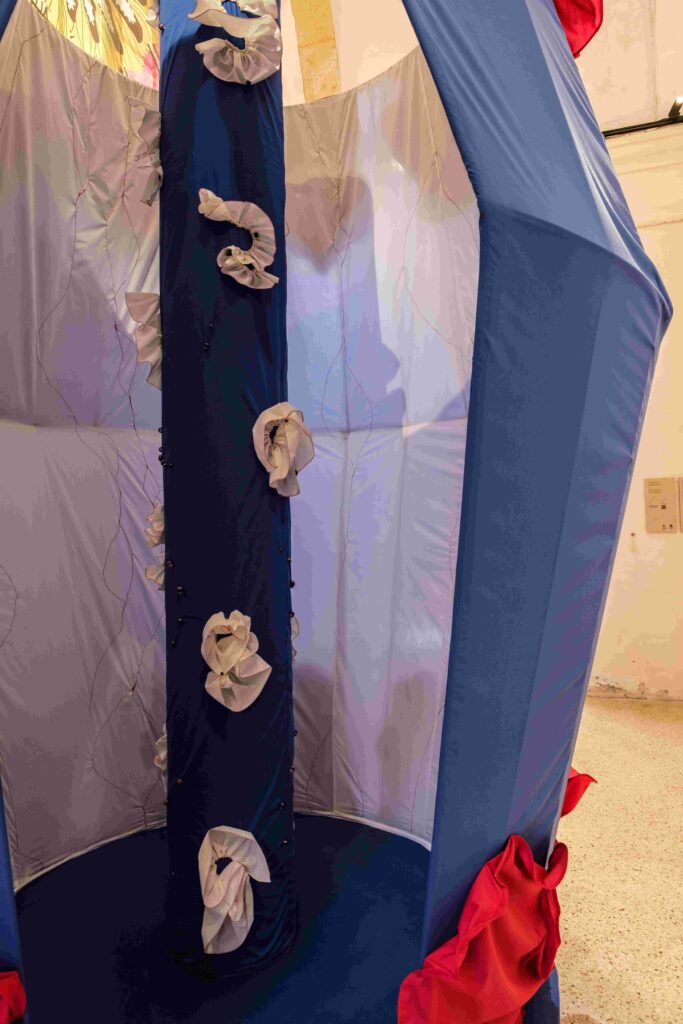
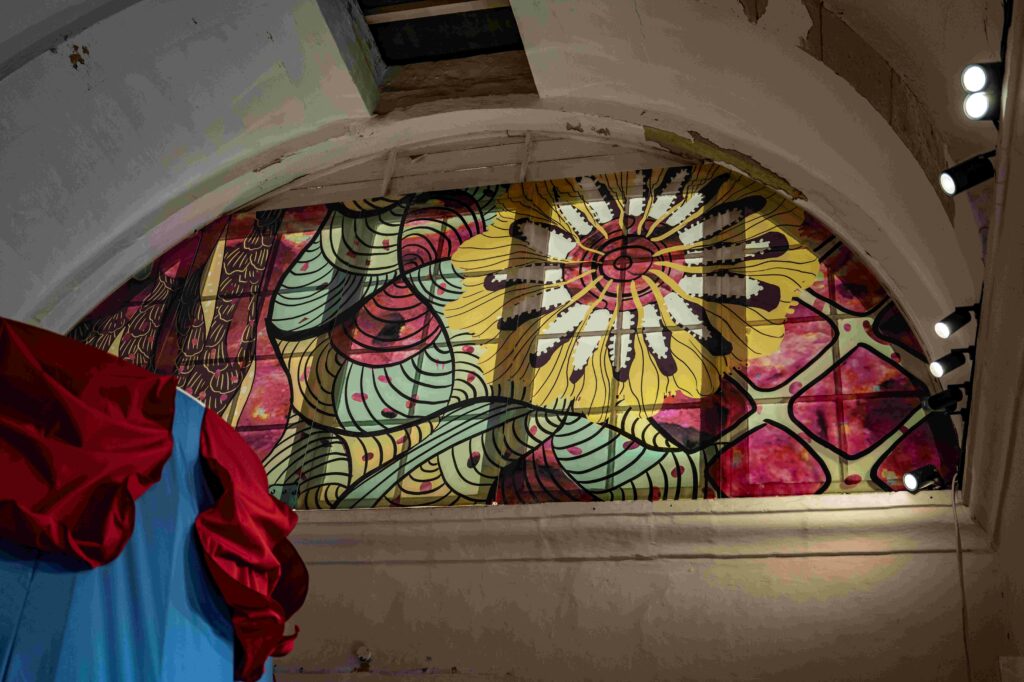
In The Echoes from Within, Ernestina Mansa Doku builds a space inspired by the form of the Chevron bead. Motifs recalling African wax prints function like contemporary stained glass, carriers of knowledge and memory. Visitors can enter the interior of this structure, experiencing identity as a multilayered construction marked by history, migration, and exchange. Identity here is not a line but a weave.
The exhibition proposes a vision of the future based on interdependence and empathy. Its sonic dimension deepens the multisensory experience, reinforcing the idea of co-creation and community.
The pavilion takes up this theme by reactivating a moment of historical optimism. It treats what remained unfinished not as a loss but as an opportunity – inviting artists and audiences to continue a story that was paused but not concluded.
As Kwame Nkrumah, the first president of Ghana, said:
“We face neither East nor West; we face forward.”
Spoken at a moment marked by enormous potential, these words resonate today with renewed strength. The exhibition is rooted in the past, yet decisively oriented toward the future and a community that can still be woven.
Artistic Residency ‘26
Eliza Proszczuk
Where the Lad Arrives, Good Fortune Thrives. The Cow Will Calve, the Maiden Will Wed.
Ernestina Mansa Doku
The Echoes From Within
Marta Nadolle
I Miss You
Related news